Execution That Sticks: 4DX, OKRs, KPIs, and Incentives That Move the Needle
Most teams aren’t failing because they lack ambition.
They’re failing because execution is fuzzy.
The strategy is inspirational. The weekly behavior is chaotic.
That’s why I’m a huge believer in execution systems—especially The 4 Disciplines of Execution (4DX)—and why I like OKRs and KPIs when they’re used like tools, not trophies.
The loud-customer problem
Organizations overreact to one loud customer because:
they don’t trust their data
they don’t have a visible scoreboard
they don’t have a cadence to review signal vs noise
If the only “scoreboard” is feelings, you will be led by emotion.
The execution stack (simple version)
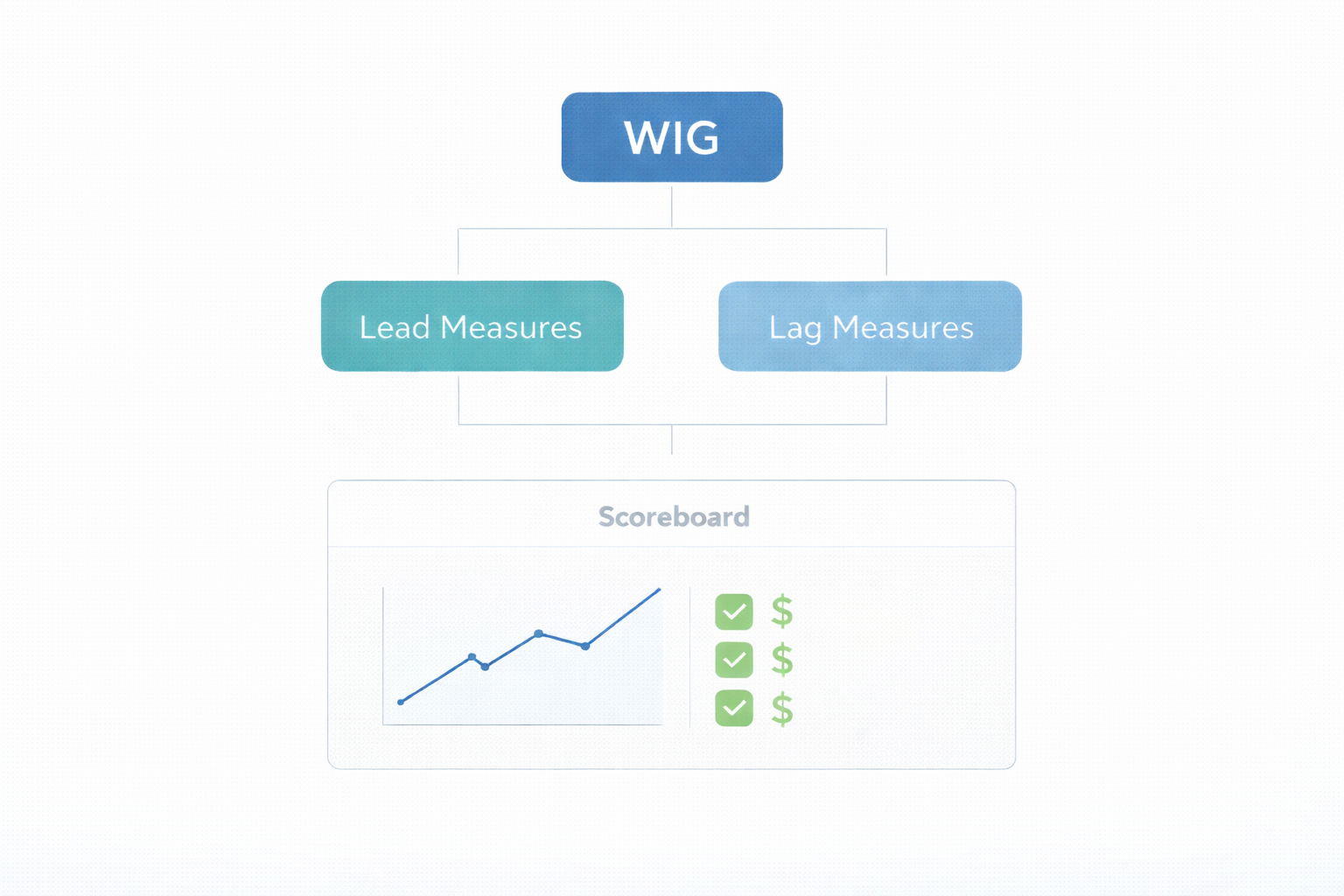
Pick the Wildly Important Goal (WIG)
Define lead measures (predictive, influenceable)
Keep a scoreboard people can see
Run a weekly cadence of accountability (commitments, not updates)
OKRs can sit on top of this. KPIs can live inside it. But without weekly commitments, it’s theater.
People need meaning, not just metrics
One of my favorite stories is about Columbus Metropolitan Library leadership reframing purpose for a security guard: your work isn’t “standing here.” Your work is making kids feel safe so they can learn.
That’s the missing link in most KPI dashboards: why it matters.
Incentives: pay for the right levers
Incentives can move the needle fast—when they reward the right behaviors.
I learned a lot about this through my dad, Sam Pratt, and the principles behind Work Focused Improvement: you don’t just measure outcomes—you identify the levers that drive them and reinforce those.
Bad incentives create bad behavior. Every time.
The moonshot example
John F. Kennedy didn’t inspire people with 42 metrics. He created:
a clear finish line
a shared mission
a time-bound challenge
a national scoreboard everyone understood
That’s the model. Clear target. Shared meaning. Consistent cadence.
If your goals feel motivational but your execution feels random, you don’t need more inspiration. You need a scoreboard and a weekly rhythm.