Marketing Is the Headlight of the Business (Not the Horn)
There’s a quote I’ve used for years:
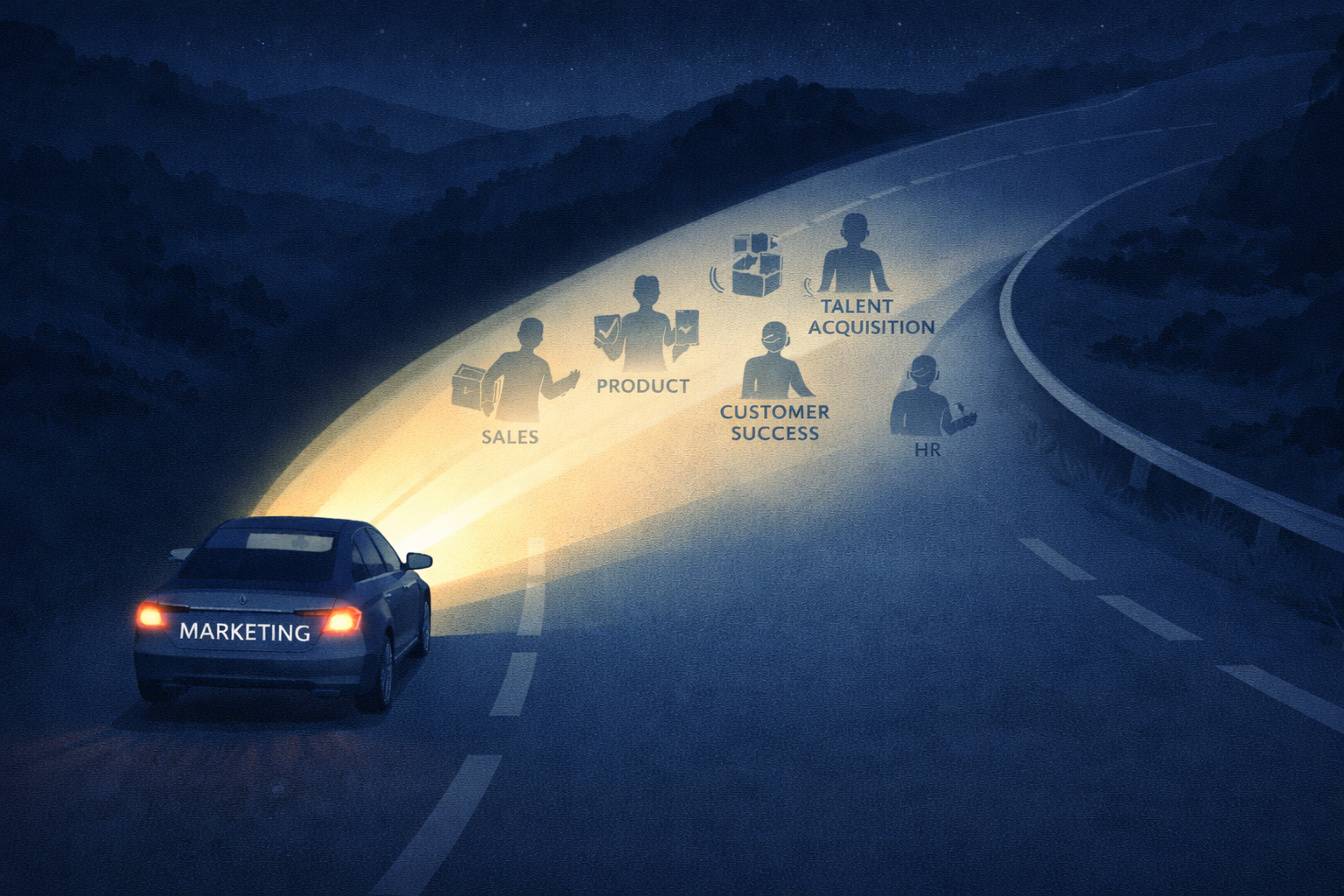
“Marketing should be the headlight of an organization, partnering with every department to achieve consistency and reach mutual goals.”
Not the horn. Not the paint job. The headlight.
In big companies, marketing can hide behind brand campaigns and agencies. In SMBs and startups, you don’t have that luxury. Every dollar has to pull its weight. Every project has to tie back to growth or retention.
Over time, I’ve boiled marketing’s job down to six core responsibilities. If your team isn’t doing these things, you don’t have a marketing problem—you have a headlight problem.
1. Generate Leads for Sales / Business Development
Yes, it starts here. Not because “leads” are everything, but because cash flow is real.
Marketing’s first responsibility is to create consistent, qualified demand:
Clear ICP and target lists
Campaigns that speak to specific pain, not generic buzzwords
Lead sources that are actually trackable and repeatable
If sales is constantly begging, “We need more leads,” it’s usually a sign marketing is chasing activities instead of owning pipeline.
2. Help Sales Convert Prospects into Customers
Leads don’t pay the bills. Customers do.
Good marketing doesn’t throw MQLs over the fence and call it a day. It asks:
What tools does sales need to close deals faster?
Where are prospects getting stuck or confused?
How do we help a skeptical buyer feel safe saying “yes”?
This is where actual sales enablement lives:
Case studies that match your real segments (not vanity logos)
Simple one-pagers that explain your offer in plain English
Decks and demos that are built around buyer questions, not product ego
If your sales team has to create, hack together, or beg for a one-pager that speaks to a specific target buyer persona’s fundamental buying motive (FBM), marketing hasn’t done its job. You should already know the WIIFM for every target buyer persona’s FBM—and for the key combinations of personas and motives you sell to—so sales can just grab the right asset and go.
3. Help Customer Success Retain and Grow Customers
Most SMBs obsess over new logos and quietly bleed out the back.
Marketing should be arm-in-arm with Customer Success:
Onboarding emails that don’t just “welcome” but teach
Playbooks for QBRs and renewal discussions
Campaigns that surface expansion opportunities before a rep has to beg for them
Retention is not just a CS metric. It’s a marketing outcome. If people don’t understand the value they’re getting over time, that’s a positioning and messaging problem, not just an “implementation” problem.
4. Engage Active Users to Actually Use the Thing
If people bought your product but don’t use it, you do not have a customer. You have a countdown clock.
Marketing should own user engagement as aggressively as it owns top-of-funnel:
In-app messages that nudge people toward meaningful actions
Email sequences that show “one small win” at a time
Education content that’s built around usage data, not blog SEO wishes
Stop writing content for strangers while your active users quietly churn because they never learned feature #2.
5. Improve Product / Feature Adoption
Adoption is where product, marketing, and CS collide.
If adoption is low, I ask three questions:
Do people know this feature exists?
Do they understand why it matters to them?
Is it stupidly easy to try it once?
Marketing can (and should):
Work with product on naming, positioning, and in-app copy
Build simple “before/after” stories around new features
Run targeted campaigns to users who would benefit most
Good marketing doesn’t just launch features. It shepherds behavior change.
6. Help Recruit New Team Members
In a startup or SMB, hiring is marketing. Full stop.
Your careers page is a sales page
Your Glassdoor profile is a review site
Your LinkedIn presence is a trust signal
Marketing should support recruiting by:
Telling a clear, honest story about the mission and culture
Showcasing the people doing the work, not just the founders
Creating content that makes great candidates think, “That’s my kind of place”
If you want A-players, you can’t hand them a generic job description and a lifeless website.
Bottom line:
When marketing is the headlight, everyone sees farther:
Sales sees more qualified conversations
CS sees happier, stickier customers
Product sees clearer usage and feedback
HR sees better candidates
If your “marketing” isn’t doing these things, you don’t need a new logo. You need a new definition.