Train AI to Take Your Job
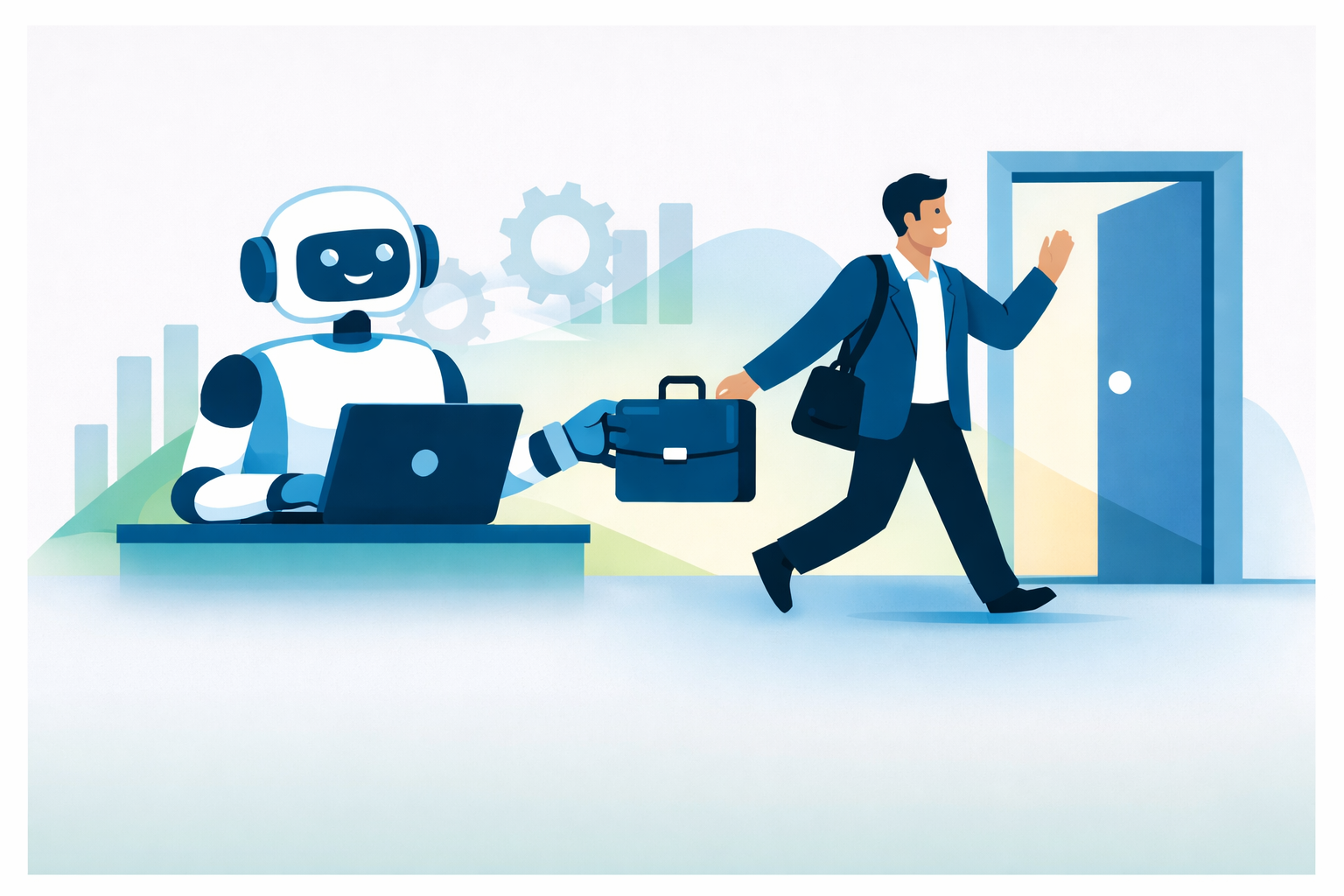
Unpopular Opinion: Do It On Purpose
Everyone’s worried AI is going to “replace humans.” That framing is comforting… because it lets you do nothing.
Here’s the unpopular truth: you should be the one training AI to replace the parts of your job that don’t deserve to exist. Not because you want to get laid off. Because if you don’t automate your low-value tasks, you’ll be stuck being the low-value task.
Economists have been saying this for years in different language: technology mostly replaces tasks, not entire occupations. Jobs are bundles of tasks—some automatable, some deeply human, most mixed. Automation shifts the bundle. American Economic Association
And the labor market data isn’t screaming “jobpocalypse.” It’s screaming “massive churn.” The World Economic Forum projects large disruption through 2030 (roles created + roles displaced), with a net increase overall—but huge reallocation and skill pressure. World Economic Forum
So if you’re waiting for clarity before you act, you’re already late.
The real threat isn’t AI. It’s someone else using AI.
In every org, the first people to “win” with AI aren’t the ones with the best prompts. It’s the ones who:
eliminate their repetitive workload,
produce more output with the same headcount,
and become the bottleneck for decisions instead of execution.
AI doesn’t have to replace you. It replaces the person who can only contribute by doing copy/paste work.
AI is a productivity multiplier (and that changes expectations)
We already have credible evidence that generative AI can materially raise productivity in real workflows. One well-known study of a generative AI assistant in customer support found meaningful productivity gains overall, with the biggest lift for less-experienced workers (and smaller gains for top performers). Translation: AI helps more people do “good enough” work faster. NBER.org
That’s not “the end of jobs.” But it is the end of hiding inside mediocre, manual execution.
“But if I automate my tasks, won’t leadership cut my role?”
They might—if your role is mainly the tasks you automated.
That’s the point.
The goal is to trade your current task portfolio for a better one:
from “doer” → “designer”
from “writer” → “editor”
from “report builder” → “decision maker”
from “scheduler” → “operator of systems”
from “answer person” → “question person”
If you don’t do that trade proactively, the trade still happens—just without your input.
Train AI on the work you should never be doing again
Here’s the playbook I recommend (and yes, it’s blunt):
Step 1: Inventory your week.
List everything you do, then tag each item:
R = repetitive
A = administrative
S = synthesis (turning info into insight)
J = judgment (decisions, prioritization, tradeoffs)
H = human (relationships, trust, persuasion)
Start with the R + A pile. That’s the stuff AI should eat first.
Step 2: Build “SOPs” like you’re franchising yourself.
If a task can be described clearly, it can be automated or accelerated. Write:
inputs
steps
templates
quality bar
common failure modes
This is literally what “training” looks like in practice: making your tacit knowledge explicit.
Step 3: Create an “AI first draft” pipeline.
Your new default should be:
AI drafts → you edit
AI summarizes → you decide
AI proposes options → you pick tradeoffs
AI generates variants → you choose positioning
This is how you reclaim hours without lowering quality.
Step 4: Move up the value chain on purpose.
Use the time you free up to do work AI can’t finish:
customer discovery calls
cross-functional alignment
strategy choices
creative direction
stakeholder management
narrative building (the “why” behind decisions)
This is where careers get safer, not riskier.
The best career insurance is being the person who deploys the machine
Automation research consistently frames this as a race between task displacement and new task creation. The winners aren’t the people who block automation. They’re the people who create the new higher-leverage work faster than the old work gets automated. Microeconomic Insights
So yes—train AI to take your job.