Most bad marketing starts in the same place:
“We built something cool. Now how do we convince people to care?”
You can feel it instantly when you land on a homepage that was written from the inside out:
“Innovative end-to-end solutions…”
“Leverage our proprietary platform…”
“Synergistic, scalable, AI-powered…”
Meanwhile, the buyer is thinking, “I just want fewer no-shows,” or “I want my team to stop drowning in spreadsheets.”
My core belief:
Great marketing starts in the customer’s real life, not in your feature list.
Your Customer Wakes Up in a Story That Has Nothing to Do With You
When your buyer’s alarm goes off:
They’re not thinking about your brand
They’re thinking about a meeting they’re dreading
Or a number they’re behind on
Or a problem they promised their boss they’d fix
You’re not the hero. You’re not even in the opening credits yet.
Your job is to enter their existing story:
Their pressure from leadership
Their fear of making a bad call
Their frustration with the status quo
If your copy doesn’t sound like it was written by someone who’s actually sat in their chair, you’ll lose to someone who has—whether their product is better or not.
Ask Better Questions (Then Steal Your Own Answers)
Before I write or approve any marketing message, I like to ask:
What’s the moment in their day where this pain actually shows up?
What do they type into a search bar when they’re frustrated?
What do they complain about in texts or Slack messages?
Then I steal those exact words.
If your customers say “I’m drowning in manual follow-up,” your headline should not say “Automate multi-channel workflows at scale.”
Say: “Stop manually chasing patients who never call back.”
Then explain how you automate it.
Don’t Just “Understand Pain.” Respect Trade-Offs.
Customers don’t buy the “best” solution. They buy the solution that feels like the least risky trade-off.
Your product asks them to trade:
Time (implementation, training)
Money (subscription, services)
Political capital (asking the team to change)
Marketing should answer, explicitly:
How long will this really take?
What will be hard at first?
What are we doing to lower that pain for you?
Honesty about trade-offs builds more trust than fake perfection. “This will take 90 days to fully roll out, and here’s the step-by-step plan” will beat “Onboard in minutes!” every time with serious buyers.
Make It Stupidly Easy to Picture Success
Vague benefits are comforting to write and useless to read.
Compare:
“Improve patient engagement and drive revenue.”
vs“Get 30% more of your existing patients to show up for their post-op follow-ups—without adding any staff.”
One is marketing-speak. The other is a picture.
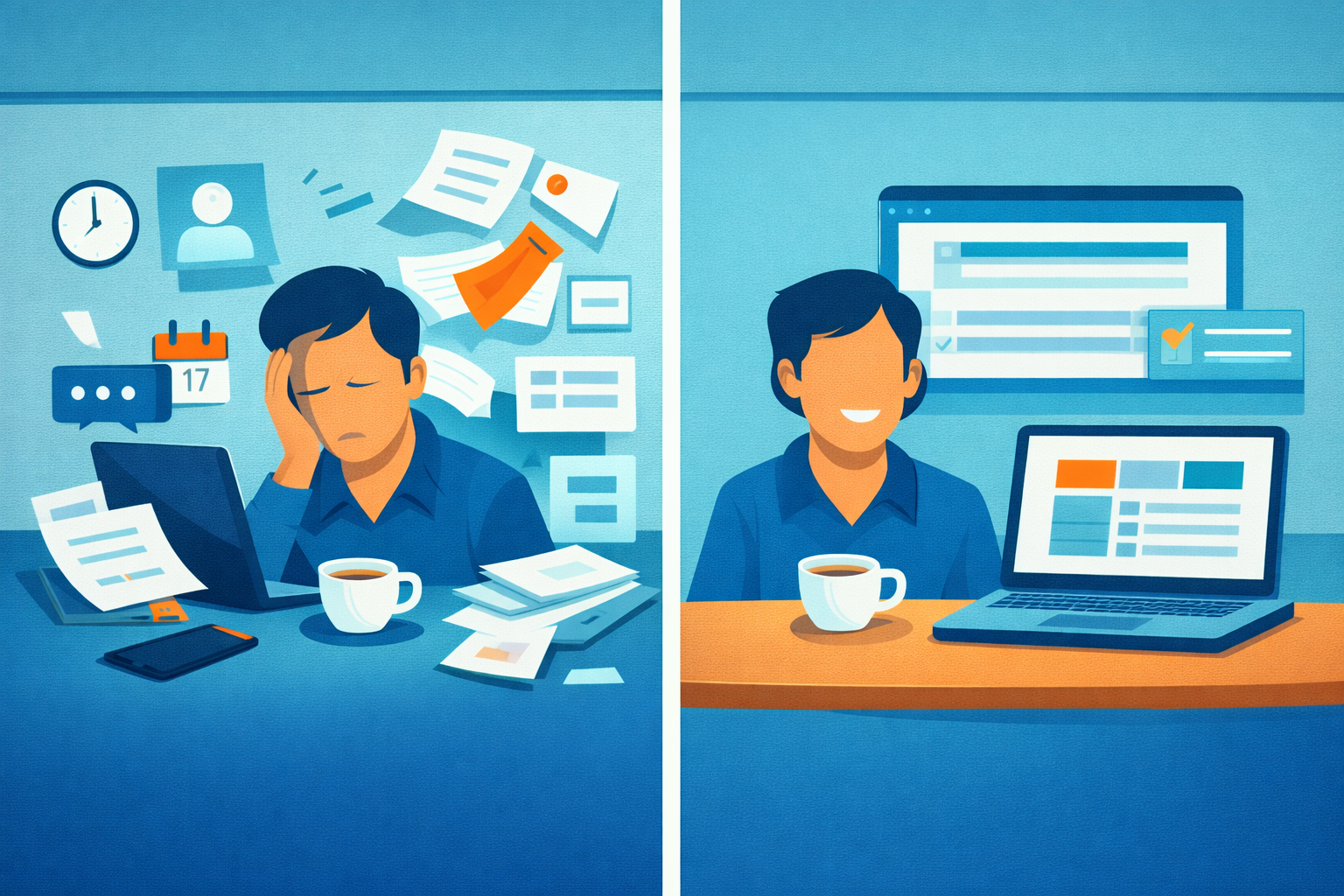
I want buyers to be able to visualize Tuesday three months from now and think, “Oh, that’s how my life would be better.”
If you can’t describe that Tuesday, you don’t know your customer well enough yet.
Bottom line:
Your product is not the starting point. Your customer’s life is.
Once you can tell their story better than they can, you don’t need to sell nearly as hard.